User Onboarding and the Shift From Repeat Use to Habit
How onboarding evolves from driving return to shaping habits over time
Turn insights into action with the Persuasive Patterns card decks
Master the science behind user motivation and create products that drive behavior.
Get your deck!User onboarding does not conclude when users return for a second or third session.
At that point, it enters a different phase.
The initial phase of onboarding is concerned with enabling value. It ensures that the product delivers on its promise in a way the user can recognize. The next phase supports return. It helps users re-engage, resume their work, and continue their progress. Beyond this lies a quieter transition, one that unfolds over time and is often less explicitly designed.
It is the transition from repeated use to habit. This shift is subtle but consequential. It marks the point at which interaction with the product requires less deliberation. Actions become easier to initiate, less dependent on motivation, and increasingly integrated into the user’s existing patterns of behavior.
Not all products require this transition. Some are used infrequently, in response to specific needs. Attempting to impose habitual use on such products would introduce friction rather than reduce it. However, for products that support recurring workflows, ongoing decisions, or continuous improvement, this transition is central.
At this point, the objective is no longer simply to bring users back but more to enable return without requiring conscious effort each time.
Habits Begin Where Motivation Fades
Early interactions are sustained by intent.
Users arrive with a purpose. They are willing to invest attention and tolerate uncertainty because they anticipate a meaningful outcome. This initial motivation, however, is inherently temporary. Over time, competing priorities emerge. The product becomes one option among many, and the willingness to invest effort diminishes.
Onboarding that relies solely on this initial motivation is therefore limited in scope.
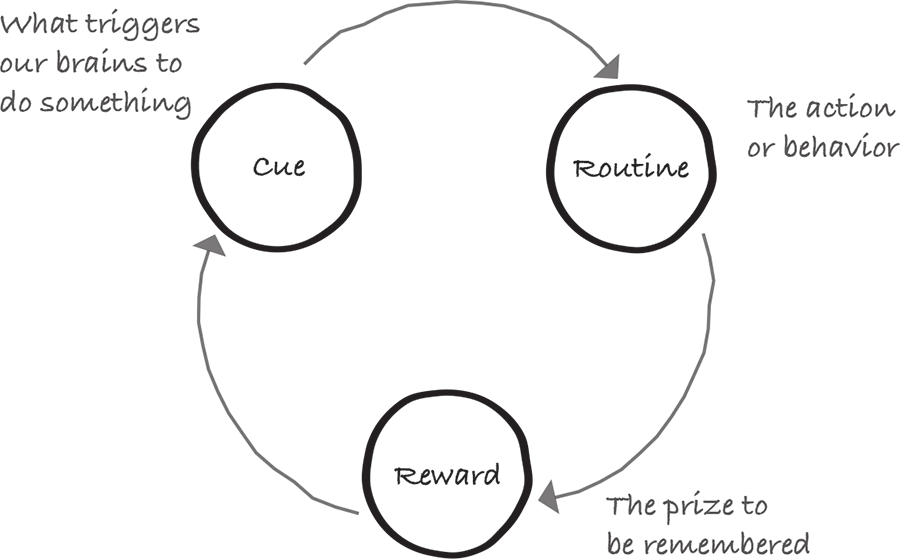
Habit formation addresses this limitation. It reduces the need for repeated decision-making. It lowers the cognitive and practical cost of re-engagement. It transforms the act of returning from a deliberate choice into something more automatic.
At this stage, the role of onboarding changes. It is no longer sufficient to guide the user through the interface. The focus shifts toward making behaviors easier to repeat. What matters is not only what the user does, but how easily that action can be initiated again under less favorable conditions.
Defining the Behavior
Habits do not form around products as a whole.
They form around specific behaviors.
This distinction is essential. A product may offer a wide range of capabilities, but habitual use depends on the repetition of a particular action in a particular context. If that action is ill-defined or too broad, repetition remains inconsistent, and the behavior does not stabilize.
The starting point, therefore, is not the feature set of the product.
It is the behavior that should recur.
This behavior must be concrete and observable. It must be tied to a recognizable moment in the user’s environment. Generalized directives such as “use the product regularly” lack the specificity required for repetition. In contrast, an action such as “review performance metrics each morning before beginning work” can be situated within an existing routine.
When onboarding is oriented around such a behavior, it establishes a foundation for repetition. The user is not encouraged to explore the product indiscriminately, but to engage in a consistent pattern of use.
In this way, onboarding changes from primarily teaching the system to establishing a rhythm.
Anchoring Behavior in Existing Routines
New behaviors are difficult to sustain when they must compete for attention. Behaviors are more likely to persist when they are attached to existing routines.
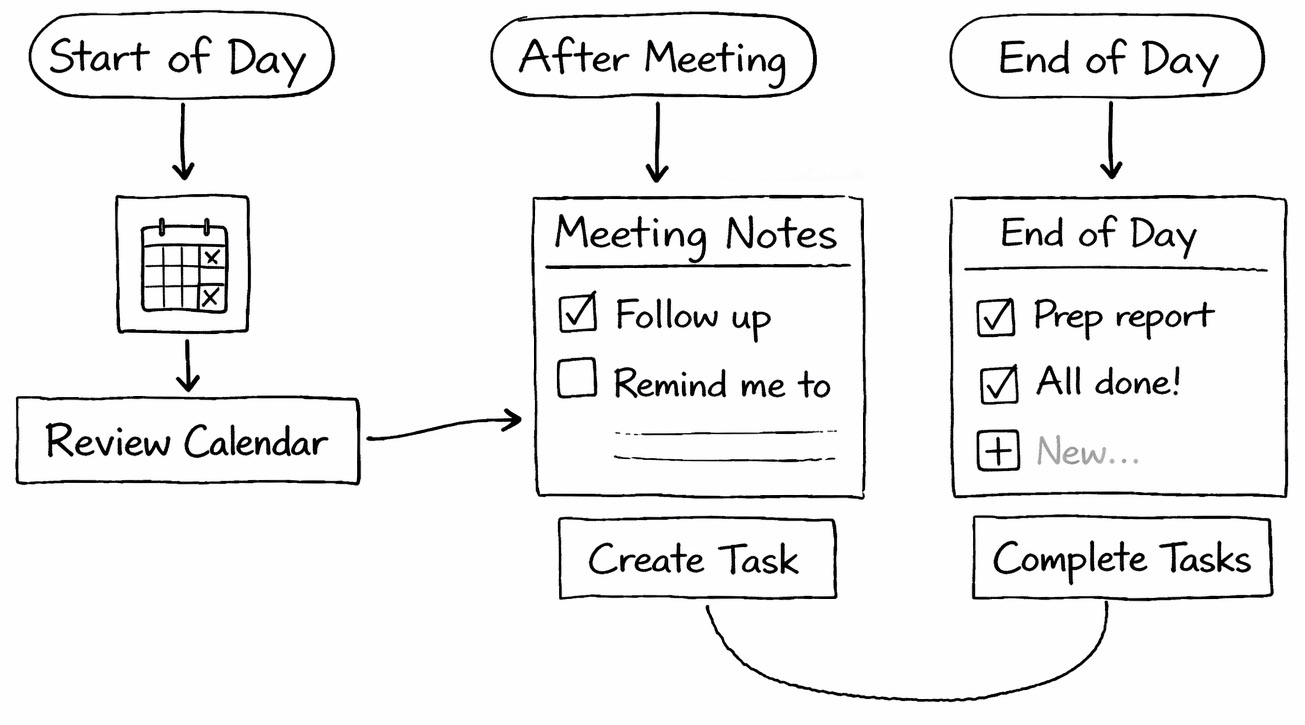
Users already operate within structured sequences of activity, which may include starting the day, transitioning between tasks, or concluding work. Such moments are stable and occur with little variation and require no additional effort to initiate.
When a product aligns with one of these moments, it benefits from that stability. The behavior it supports becomes part of an existing sequence rather than an additional obligation. This reduces the friction associated with initiation. The user does not need to determine when to act; the context itself provides the cue.
Onboarding can play an active role in establishing this connection. It can make explicit where the product fits within the user’s day. Rather than focusing solely on how to use the product, it can indicate when its use is most appropriate.
These indications function as temporal anchors and can help transform intention into action by linking behavior to context.
Reducing the Threshold for Action
For a behavior to become habitual, it must be resilient under less favorable conditions.
This places a constraint on its size.
If an action requires significant time, attention, or effort, it is unlikely to be repeated consistently. It will be deferred or abandoned in moments of distraction or fatigue. This is not a reflection of user intent, but of the cost associated with initiation.
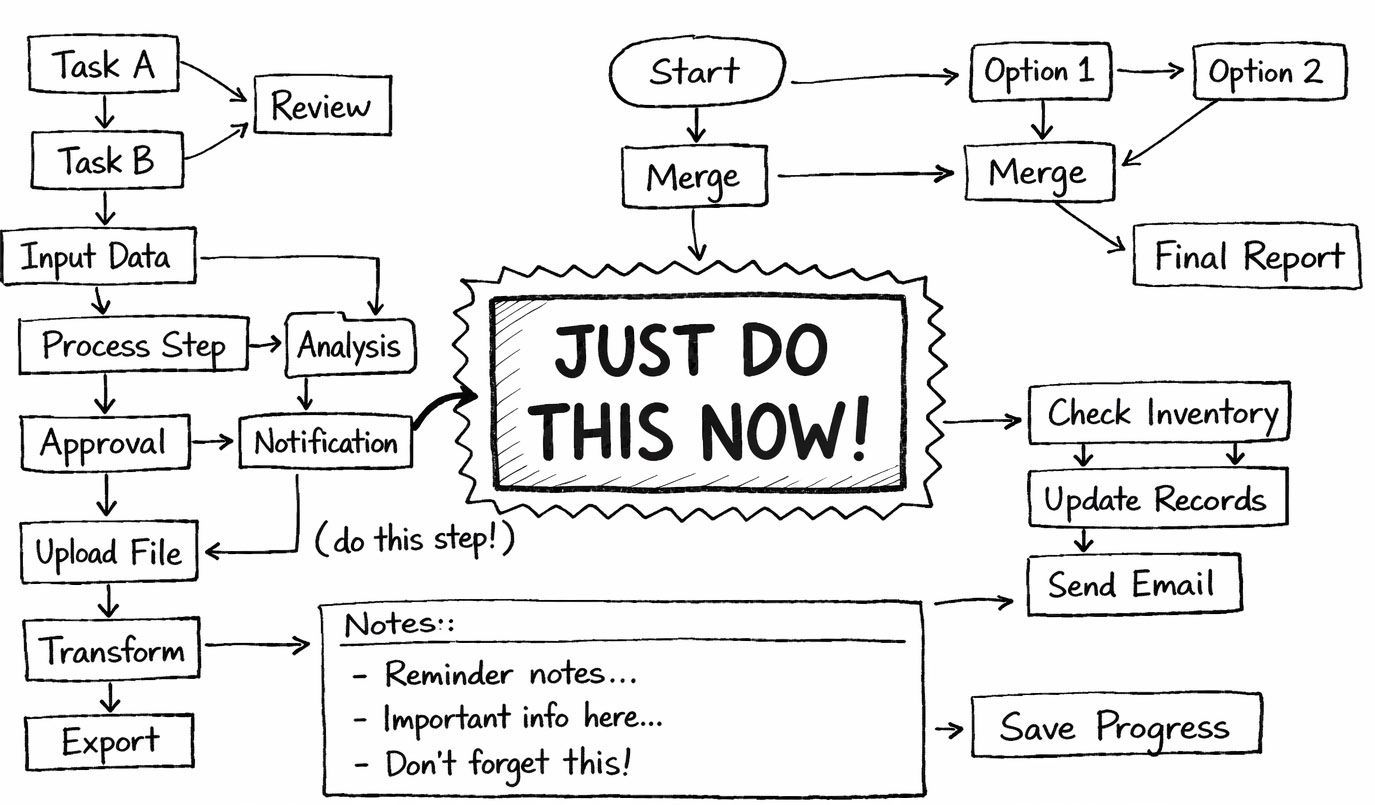
Onboarding should therefore seek to reduce this cost.
The objective is to identify the smallest meaningful version of the behavior. This is the version that can be performed quickly while still producing a recognizable outcome. It does not encompass the full capabilities of the product, but it preserves continuity.
This often entails guiding users toward partial completion. Instead of requiring a comprehensive workflow, the system supports incremental progress. Each instance of action reinforces familiarity. Familiarity, in turn, reduces friction.
Over time, repetition becomes easier – and consistency, rather than intensity, drives accumulation.
Making Progress Perceptible
Repetition is sustained when it produces visible results.
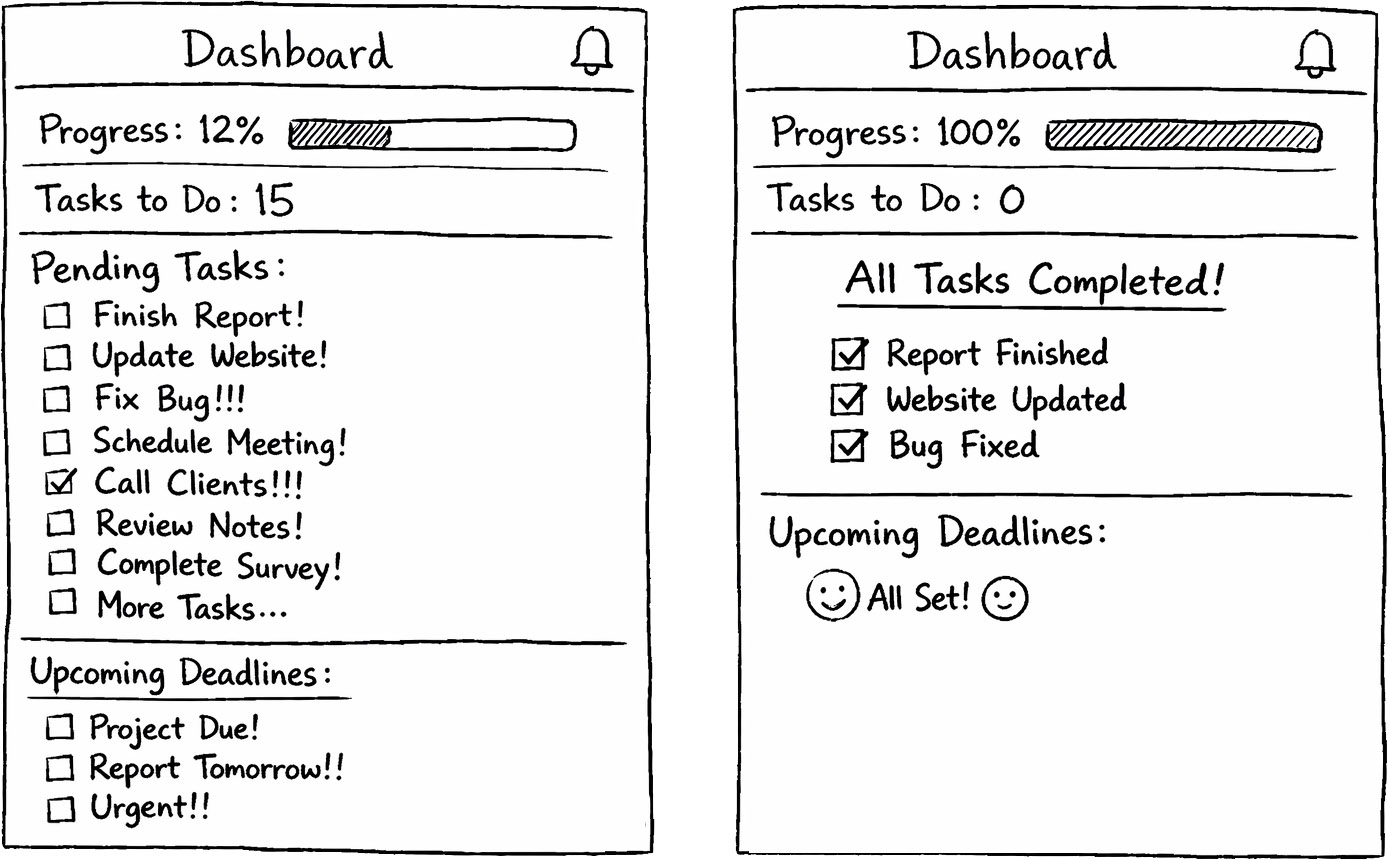
Users must be able to perceive the effects of their actions. Without this perception, behavior remains unanchored. Effort is expended without a clear sense of advancement.
Progress does not need to be elaborate to be effective. It may take the form of completed tasks, updated states, or visible improvements. What matters is that the user can connect their action to a change in their environment.
These signals reinforce the value of continued engagement.
They transform abstract effort into tangible movement.
Onboarding should therefore ensure that progress remains visible across repeated interactions. Not only during the initial experience, but as part of the ongoing use of the product.
Reinforcing Improvement
The most durable form of reinforcement is not activity, but improvement.
When users experience a meaningful enhancement in their own capabilities or outcomes, the product becomes associated with that improvement. This association strengthens the likelihood of return.
Such reinforcement does not depend on external rewards. It arises from the user’s own perception of progress. A clearer overview, a more efficient process, or a more organized state can all serve as indicators.
Onboarding should make these improvements legible.
It should highlight the connection between action and outcome, ensuring that the user recognizes the value being generated.
Establishing Continuity
Each interaction with the product should contribute to the next. This continuity reduces the effort required to re-engage. By preserving context, recalling previous actions, and suggesting subsequent steps, the system enables users to resume without reconstruction.
These mechanisms are often subtle and operate through remembered preferences, pre-filled inputs, or contextual prompts. Their effect, however, is cumulative and transform discrete sessions into a coherent sequence.
Onboarding, at this stage, extends beyond immediate guidance. It prepares future interactions by shaping the conditions under which they will occur. The experience becomes progressive rather than episodic.
Not Everything is Fit For Habitual Use
Not all behaviors benefit from becoming automatic.
Some actions require attention and deliberation. Others benefit from speed and repetition. The objective is to distinguish between these and to support the latter.
Supporting behaviors are particularly suitable candidates. These include returning at appropriate times, accessing relevant views, logging activity, and reviewing progress. When these actions become easier to initiate, the overall experience improves. Users expend less effort on preparation and more on meaningful engagement.
Automaticity, however, develops gradually. It varies across individuals and contexts: some users adopt patterns quickly, while others require sustained reinforcement.
Onboarding must therefore accommodate this variability. It must support repetition long enough for patterns to stabilize, and then recede as those patterns become self-sustaining.
Closing Perspective
The transition from repeat use to habit is not achieved through additional onboarding steps, but through the formation of patterns:
- Patterns that align with the user’s routines.
- Patterns that are sufficiently lightweight to persist.
- Patterns that produce visible and meaningful outcomes.
Onboarding does not impose these patterns directly, but shapes the conditions under which they can emerge. By reducing the cost of action, anchoring behavior in context, and reinforcing progress, it enables repetition to take hold. Over time, the need for conscious initiation diminishes.
The behavior no longer requires a decision.
It becomes part of how the user works.
- The Optimal User Onboarding Zone by Krys Higgins
- Hooked: How to Build Habit-Forming Products by Nir Eyal
- Persuasive Design Ten Years Later by Anders Toxboe
- Clear, J. (2018). Atomic habits: An easy & proven way to build good habits and break bad ones. Avery.
- Duhigg, C. (2012). The power of habit: Why we do what we do in life and business. Random House.
- Eyal, N. (2014). Hooked: How to build habit-forming products. Portfolio.
- Higgins, K. (2018). Better onboarding. Rosenfeld Media.
- From First Run to the Long Run by Krys Higgins at Krys Higgins
- Long-Term Guidance by Krys Higgins at Krys Higgins
- 4 User States for Onboarding Planning by Krys Higgins at Krys Higgins
- Hook Model Workshop Exercise by Anders Toxboe at Learning Loop
- Habit Stacking Exercise by Anders Toxboe at Learning Loop
- Habit Change Modeling Exercise by Anders Toxboe at Learning Loop
- Your User Onboarding Flow Is Too Shortsighted by Ty Magnin at Appcues
- Crazy Egg. (2015). 27 customer retention strategies. Retrieved from https://blog.crazyegg.com/2015/03/23/27-customer-retention-strategies/