User Onboarding and the Moment It Clicks
Why the first experience of value defines activation and shapes onboarding

Turn insights into action with the Persuasive Patterns card decks
Master the science behind user motivation and create products that drive behavior.
Get your deck!User onboarding is often reduced to a sequence of steps: a checklist of screens, tooltips, and guided interactions that move a user from entry to basic usage. This framing is convenient, but it misses what actually determines whether a product is understood, adopted, and ultimately retained.
In practice, onboarding is not defined by the steps a user completes, but by the transformation those steps enable. It is a progression toward a single, defining moment—a point at which the product stops being something the user is evaluating from the outside and becomes something they understand from within.
This moment is not abstract. It is concrete and experiential. It is the first time the product delivers on its promise in a way the user can recognize in their own context. The moment when expectation gives way to evidence.
It is commonly referred to as the Aha! moment.
More precisely, it is the moment it clicks.
And it is the foundation upon which activation is built.
From First Time Use to Understanding
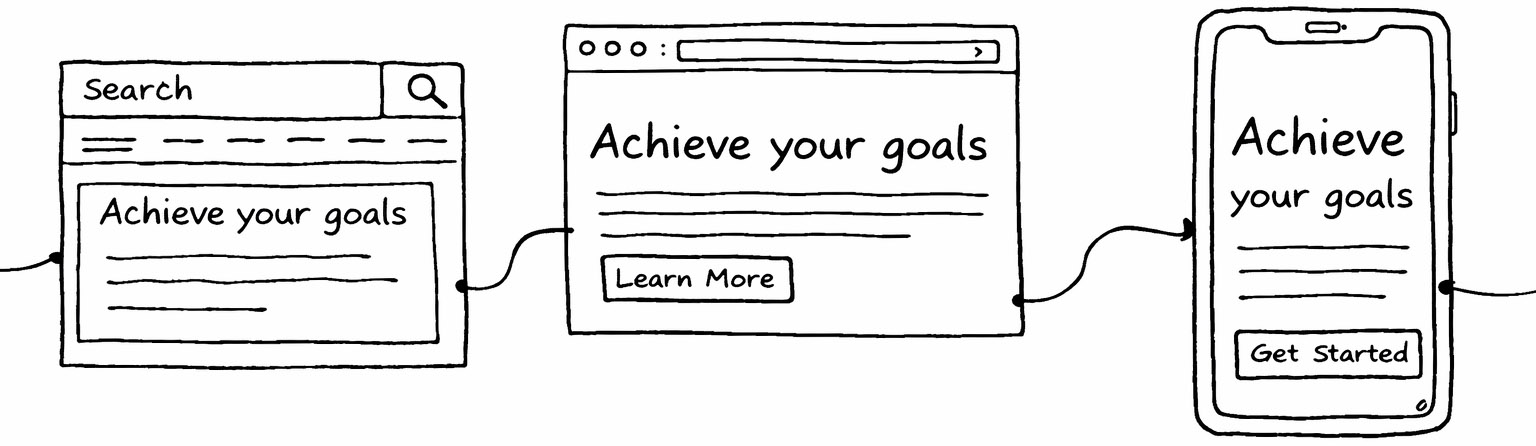
Every user arrives with a mental model already in motion. That model is shaped by what they have seen, what they have been told, and what they have used before. A landing page may suggest an outcome. A recommendation may imply credibility. Prior tools may establish expectations about how things should work.
But at this stage, none of this amounts to belief. It is provisional. The user is still interpreting, still mapping what they encounter onto what they already know.
The role of onboarding is to complete that mapping.
It must take a loose expectation—“this might be useful”—and turn it into something grounded: “this works for me.” That shift cannot be achieved through explanation alone. Explanations can orient, but they cannot convince. Conviction emerges when the user can connect the product to something already real in their world.
That connection tends to anchor itself in one of three places:
- A task they perform repeatedly.
- A process they find difficult or inefficient.
- A result they care about achieving.
When the product clearly intersects with one of these, interpretation gives way to recognition. The user no longer needs to translate what they are seeing. They can place it directly into their own experience.
Understanding, in this sense, is not learned. It is recognized.
The First Experience of Value
The Aha! moment is often described as a realization, but in practice it is better understood as an experience. It occurs when the user does not simply understand what the product claims to do, but directly encounters its effect.
This distinction matters. Reading about value is not the same as perceiving it. Seeing a feature is not the same as benefiting from it. The moment that matters is the one in which something changes for the user in a way they can detect.
That change may be small in scope, but it must be meaningful in context:
- A task is completed more quickly than before.
- A process requires fewer steps or less effort.
- A result appears that was previously unavailable or difficult to obtain.
What defines the moment is not magnitude, but relevance. The improvement must register against something the user already cares about.
“User onboarding succeeds when the user can explain the value of the product in their own terms.”
At that point, the product no longer relies on its own description. The user has internalized it. This is what defines activation: not exposure to functionality, but the user’s ability to situate that functionality within their own goals and constraints.
It is the moment the product makes sense.
Why the Ramp Up Matters
In many products, the distance between entry and first value is longer than necessary. Users are introduced to configuration screens, setup requirements, and guided tours before they are allowed to experience a meaningful outcome. Each of these elements may be individually justified, but together they create a delay.
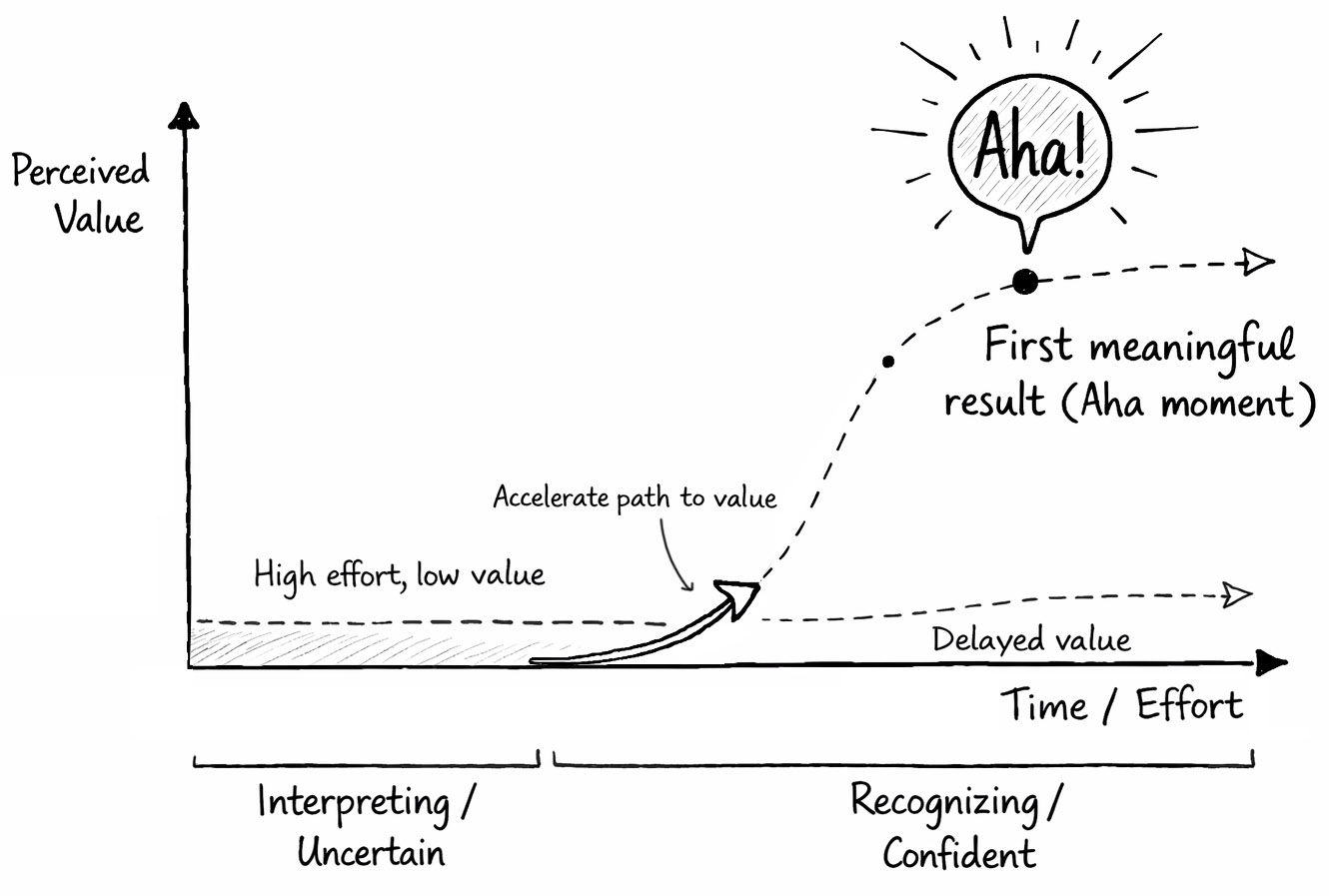
This delay is not neutral. It changes how the product is perceived.
Instead of acting as a bridge to value, onboarding becomes a period of sustained effort without visible return. Users are asked to invest attention, make decisions, and learn an interface before they have any evidence that doing so will pay off.
Most do not persist.
They leave while still trying to understand how the pieces fit together. They interact with the surface of the product without ever encountering its substance. From their perspective, the experience feels incomplete—not because the product lacks capability, but because its value remains out of reach.
Onboarding fails in these cases not because users are unwilling, but because the product asks for commitment before offering proof.
Bringing the Aha! Moment Closer
The central objective of early onboarding is to reduce the distance between promise and experience. The shorter this distance, the more likely it is that users will remain engaged long enough to reach the moment where value becomes clear.
This does not require simplification for its own sake. It requires alignment.
The product must be grounded in something the user already understands. It must show where it fits into an existing workflow, not as an abstract tool, but as a concrete intervention in a familiar sequence of actions.
A simple progression is often sufficient:
- The user recognizes their starting point.
- They observe a change introduced by the product.
- They see the outcome of that change.
- They form a mental model that connects these elements.
Once this sequence is established, it can be reused. The user carries it forward, applying it to new features and scenarios as their engagement deepens.
Making Value Easy to Picture
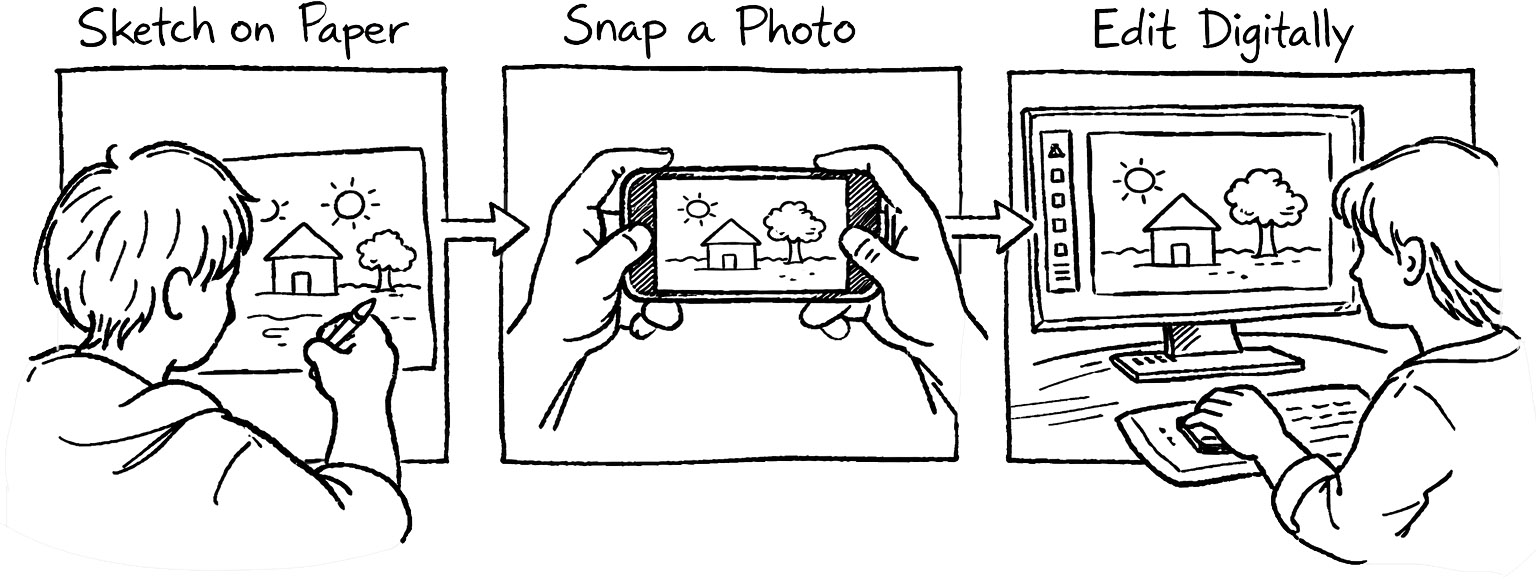
Before users can experience value, they must be able to anticipate it. This anticipation is not about imagination in the abstract, but about situational relevance. Users need to see themselves using the product in a context that resembles their own.
This is where specificity becomes important.
When a product is presented in a way that clearly maps onto existing behavior, users begin to simulate its use. They compare it—implicitly or explicitly—with their current approach. This comparison makes the potential improvement visible before it is realized.
Clarity supports this process. The user does not need exhaustive detail, but they do need enough resolution to understand what will change and why it matters. Without that, the product remains ambiguous, and ambiguity weakens motivation.
To picture value is to begin believing in it.
From Promise to Mechanism
An outcome creates interest. A mechanism creates credibility.
When a product claims to save time, reduce effort, or improve results, users naturally ask how. If that question is left unanswered, they are forced to construct their own explanation. In doing so, they often default to skepticism.
A concise, concrete explanation can close this gap.
It does not need to expose every detail of the system. It needs only to make the causal path legible: what the product does differently, and why that difference leads to the promised outcome. When users can grasp this at a high level, the product feels grounded rather than speculative.
The experience shifts from assertion to understanding.

Designing for Activation: The First Meaningful Result
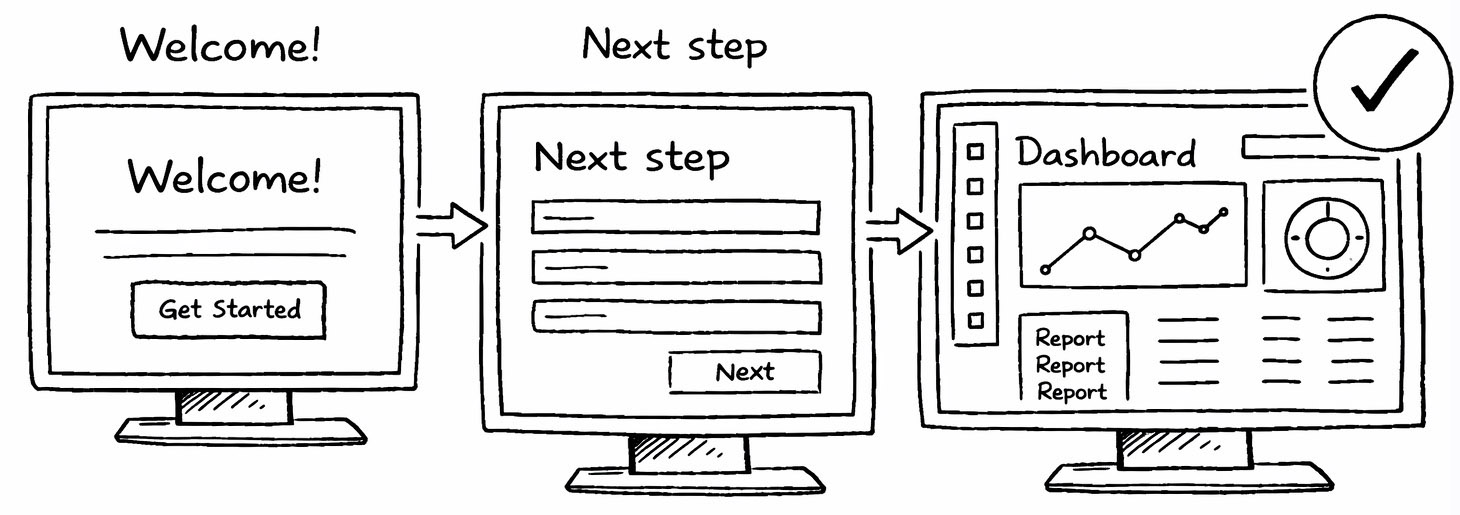
Once inside the product, onboarding should orient toward a single objective: enabling the user to reach a first meaningful result as directly as possible.
This is the point at which activation occurs.
Importantly, this does not mean exposing the full breadth of the product. Breadth can overwhelm. What matters is that the result reflects the promise that brought the user in. It should be specific, recognizable, and relevant to their goals.
Reducing friction in this phase is critical. Preloaded data, sensible defaults, and guided actions can all serve to accelerate progress. These are not shortcuts in the negative sense; they are scaffolding. They allow the user to experience the outcome before fully understanding the system that produces it.
Once the result is visible, understanding can follow.
What creates momentum is not the interface itself, but the user’s recognition that something has improved.
The Moment to Ask
There is a point at which the user has accumulated enough evidence to make a decision. They have seen the product in action, understood its relevance, and experienced its benefit in at least one meaningful instance.
At this point, the dynamic changes.
Before this moment, any request for commitment—whether to sign up, upgrade, or invest further—introduces risk. The user is being asked to decide without sufficient grounding. After this moment, the same request aligns with what the user has already observed.
It no longer feels like a leap. It feels like a continuation.
Timing, therefore, is not a matter of optimization at the margins. It is structural. Onboarding should be designed to lead deliberately to this point, ensuring that the request for commitment follows naturally from the user’s own experience of value.
From First Experience to Habit
The Aha! moment establishes belief, but belief alone does not create retention. What follows must reinforce and extend that initial experience.
Repeated encounters with value are what form habit.
Once users have seen the product work in their context, they are more inclined to return. Their willingness to invest time increases because the uncertainty has been reduced. Over time, the product can expand its role, supporting additional tasks, processes, and outcomes.
In this sense, onboarding does not end after first use. It evolves.
However, everything that follows depends on the initial experience. Without a clear and meaningful first encounter with value, there is no foundation upon which habit can form.
Closing the Gap
User onboarding is often framed as guidance through an interface, but its true function is more fundamental. It exists to make value perceptible.
The moment it clicks is where this perception crystallizes. It is the point at which expectation is tested against experience and confirmed. Where curiosity is replaced by belief, and where the user decides—implicitly or explicitly—to continue.
Designing for this moment shifts the emphasis of onboarding. It moves attention away from steps and toward outcomes, away from explanation and toward experience, and away from activity and toward progress.
When that shift is made, onboarding becomes less about moving users forward and more about helping them see clearly.
And once they see, the rest follows.
- Evaluating onboarding experiences by Krystal Higgens
- Retention is King by Andrew Chen
- The complete guide to onboarding customers for long-term success by Intercom