
Why: Promote active participation in decisions through a visual representation of the group's preferences
When: Use to quickly gauge which of multiple options or alternatives has the most backing from the group
Instructions for running this play
- Ask the group to show how they stand on an idea or proposal.
- Each person responds by showing a thumbs-up, thumb-sideways, or thumbs-down.
- The group moves forward only when everyone shows either a thumbs-up or thumb-sideways. Discuss until everyone has had a chance to express their view for disagreeing on the proposal and everyone agrees to move forward.
 |
Thumbs-up indicates agreement with the proposal as stated or presented. It’s a “Yes, I can accept that decision and want to move forward with consensus agreement.” |
 |
Thumbs-sideways indicates incomplete agreement or desire to modify the proposal, but does not rise to the level that would cause a member to block consensus.It’s a “It’s good enough, I can live with it, and want to move forward.” |
 |
Thumbs-down indicates a strong disagreement with the proposal and a block of the consensus on the proposal.It’s a “I do not like the proposal and want to share my opinion and ideas with the group before moving forward.” |
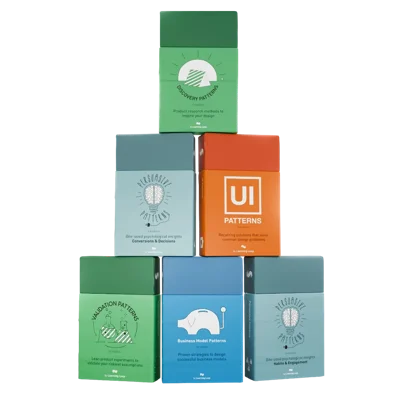
Run better workshops with Learning Loop card decks.
Every card deck includes workshop patterns, so your team can put the methods to work in your next session.
Running behavioral design workshops? The Persuasive Patterns Workshop Playbook (PDF) shows you how to design and run them.
Browse the card decksRelated plays
Sources
- The Roman Voting Technique for Agile Teams by Carlton Nettleton