The Business Model of Enough
How to build products that deliver on their value promise, allow customers to finish, and create sustainable business value through trust, voluntary return, and solving the real job to be done
Turn insights into action with the Persuasive Patterns card decks
Master the science behind user motivation and create products that drive behavior.
Get your deck!What if the best way to make customers return is to let them finish?
Most digital products are designed to keep people engaged. Finish a course and another is recommended. Complete a task and another appears. Reach a goal and the product introduces the next milestone. From a business perspective, this seems logical. More engagement creates more opportunities for conversion, revenue, and retention.
But what if we didn’t need to keep people engaged beyond the point where they had achieved what they came for?
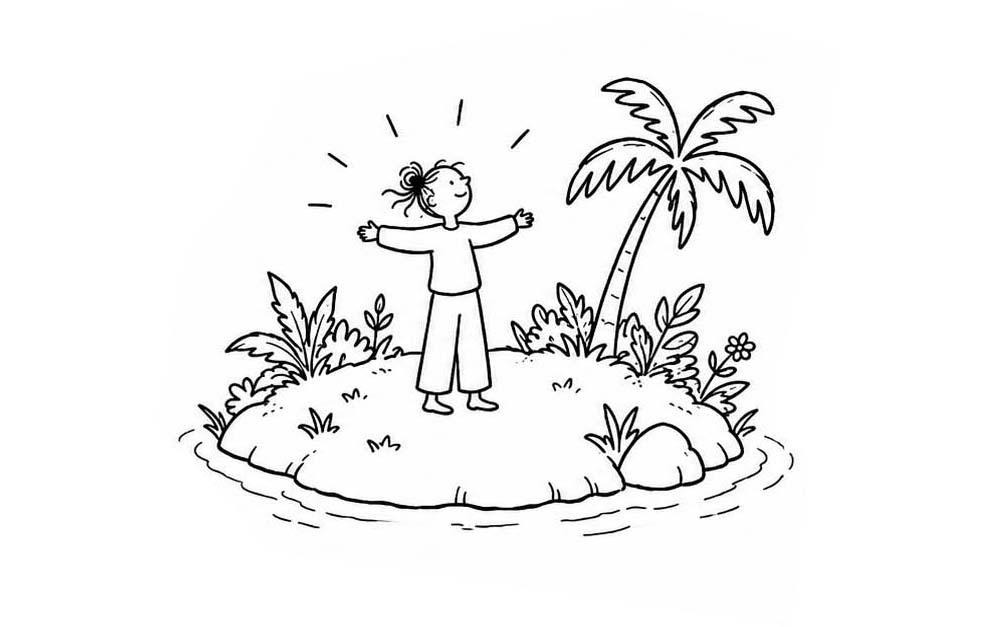
Consider the business models we already use. Subscriptions, Pay Per Use, Freemium, and traditional product sales are all established ways of creating and capturing value. None of these inherently requires us to keep customers engaged beyond the point where the product provides value.
So why do companies continue to pursue ways of increasing engagement or locking us into products we no longer need or want to use?
Perhaps because we’ve become so focused on measuring how much people use our products that we’ve lost sight of why they chose them in the first place. When engagement becomes the goal rather than a means to an end, keeping customers active can become more important than helping them accomplish what they came for.
In my previous articles, Designing for Enough and Not Every KPI Should Be Maximized, I explored how to help users recognize when they have done enough and how to define KPIs around meaningful outcomes rather than maximizing activity.
But this raises an important business question: Can we build a sustainable business around experiences that are designed to end?
Customers hire products to get a job done, not to stay engaged
The Jobs to Be Done perspective offers a useful starting point. Customers don’t necessarily want to use our products. They want to accomplish something, and the product is a means to that end.
Someone doesn’t necessarily want to complete twenty learning modules. They want to develop a skill. Someone doesn’t necessarily want to exchange hundreds of messages. They want to establish a meaningful relationship. Someone doesn’t necessarily want to spend hours organizing tasks. They want to feel confident that their important commitments are being handled.
The problem arises when we confuse using the product with achieving the customer’s objective. A learning product can become exceptionally good at increasing lesson completion without helping people develop the skills they came to learn. A relationship product can generate more interactions without creating more meaningful relationships. Both might report improving engagement metrics while failing to deliver on their actual value propositions.
Designing for enough means being clear about the job the customer hired the product to do and being willing to acknowledge when that job has been done.
That doesn’t mean every experience needs to end or that ongoing engagement is undesirable. Some customer needs are continuous, while others arise periodically. A fitness product might help someone maintain an ongoing exercise habit, while a learning product might support someone throughout their career.
The problem is not that customers continue using the product. The problem is when we design continued usage that no longer serves a genuine customer need.
A meaningful ending can become the next beginning
We invest considerable effort in designing the beginning of an experience. We optimize onboarding, activation, first impressions, and the time it takes customers to recognize value.
But what about the ending?
The peak-end rule describes how our retrospective evaluations of experiences can be disproportionately influenced by their most intense moments and how those experiences end. This gives us a useful perspective on why completion deserves deliberate design attention, although a positive ending alone does not guarantee that someone will return.
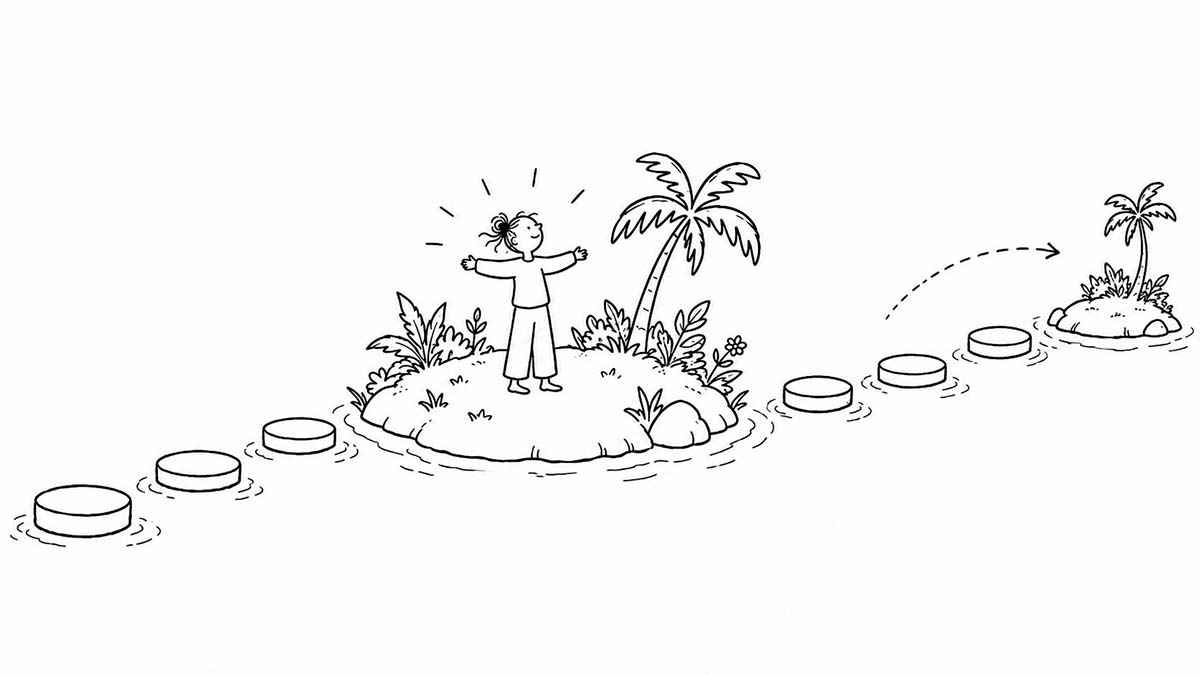
Imagine someone who wants to become better at giving presentations. They purchase a learning experience, complete the lessons, practice the relevant skills, and eventually become capable of doing what they originally set out to learn.
At that moment, the product has a choice. It can immediately recommend another course, introduce a new learning goal, and encourage the person to maintain their streak. Or it can help the learner recognize what they have accomplished.
A final practical challenge could demonstrate their new capabilities. A summary could show their progress from where they started. The product could acknowledge that they have achieved what they came for and encourage them to apply their new skills outside the learning environment.
The second experience gives the learner an explicit sense of completion. Instead of immediately introducing another unfinished goal, the product reinforces the value of the experience they just completed.
The learner might return months later because they want to develop their negotiation skills. Or they might recommend the product to a colleague who wants to improve their presentation skills.
We don’t need to keep the original problem unresolved to give customers a reason to come back.
We need to make solving that problem a sufficiently good experience that they remember us when another relevant need emerges.
We don’t need a new business model. We need better products.
It’s tempting to assume that designing for enough requires a fundamentally different way of making money. But the established business models already offer different ways to create and capture value while allowing customers to decide when and how much they need a product.
Consider a few examples from my Business Model Patterns collection.
With Pay Per Use, customers pay when they need the product. For a learning experience, we could apply a similar principle by selling individual courses or learning journeys. Someone purchases a course, completes it, and achieves the intended outcome. When another learning need arises, they can return and purchase another.
A Subscription can work just as well. A learning platform might provide ongoing access to a broad collection of courses and resources. Someone might use the product extensively while learning a particular skill, then use it very little for several weeks. That doesn’t necessarily mean the subscription has stopped providing value. The customer may value knowing that a trusted learning resource is available whenever another need arises.
With Freemium, a free experience can deliver genuine value while offering additional capabilities for customers whose needs extend beyond what the free product provides. Someone might complete a free introductory course and later purchase more advanced material or personalized coaching. The goal isn’t to make the free experience deliberately insufficient. It’s to make the additional value worth paying for.
The Solution Provider model offers another perspective: build a relationship around solving customer problems rather than maximizing usage of an individual feature or product. A learning platform might help someone develop capabilities throughout their career, even though each individual learning journey has its own endpoint.
These are all established approaches to creating and capturing value. The business model itself does not require us to manufacture dissatisfaction or unnecessary engagement.
Of course, each model has its own economics. A subscription still needs to provide sufficient recurring value, and a product serving occasional needs must earn enough from those occasions to sustain the business.
But the important question isn’t which business model we choose, but whether we design the experience to deliver the promised value or to maximize the customer’s dependence on the product.
Design for being chosen, not for preventing people from leaving
Reducing churn is a reasonable business objective when customers leave because a product has failed to deliver value. But there is a difference between reducing churn by making the product more valuable and reducing churn by making it difficult or inconvenient to leave.
The same distinction applies to engagement. Someone who continues using a product because it helps them accomplish something has a different relationship with it than someone who continues because of artificial obstacles, accumulated commitments, or repeated prompts.
For products that solve recurring but episodic problems, we should pay more attention to whether customers choose us again when another relevant need arises.
A customer who completes a learning journey and doesn’t return for three months might be dissatisfied. But they might also have achieved what they came for and simply have no new learning need during that period.
An engagement dashboard alone cannot distinguish between those situations.
Instead of measuring only how frequently people return, we should also examine successful outcomes, voluntary return for new needs, repeat purchases, recommendations, and customer lifetime value.
The commercial objective isn’t to disregard retention or revenue. It’s to understand whether we’re creating a sustainable business by delivering useful outcomes rather than continuously increasing customer activity.
A better question than “How do we make customers keep using our product?” is “Have we delivered enough value that they will choose us again?”
Five questions for designing a business around enough
When designing a product or reviewing its business model, I would ask five questions:
-
What job did the customer actually hire us to do? Separate the customer’s intended outcome from the activities that happen inside the product. Are we helping people accomplish something meaningful, or simply encouraging them to use more of what we’ve built?
-
How do we know when we’ve delivered on our promise? Define what successful completion looks like. If the customer can achieve the desired outcome without continuing to use the product, recognize that as success rather than automatically treating it as a retention problem.
-
How can we make successful completion a meaningful experience? Help customers recognize their progress, demonstrate their new capabilities, and understand what they have achieved. Don’t immediately replace one completed goal with another obligation.
-
Does our business model reward value delivery or unnecessary dependency? Examine whether revenue, product decisions, and internal KPIs encourage usage that no longer serves the customer. Consider how the same business model could better align commercial success with the customer’s actual job.
-
Would customers choose us again if they were completely free to leave? If someone has achieved what they came for, can leave without unnecessary friction, and has no obligation to return, have we delivered an experience valuable enough that they would consider choosing us again?
For me, that final question gets to the heart of designing for enough. It moves the discussion from whether we can retain customers to whether we have built something worth returning to.
A successful experience doesn’t have to be the end of the customer relationship. It can be the reason that relationship continues when another need emerges.
The business model of enough isn’t about making customers leave. It’s about building a product that’s good enough that we don’t have to make them stay.
- Designing for Enough: A Better Way to Build Persuasive Experiences by Anders Toxboe at Learning Loop
- Not Every KPI Should Be Maximized by Anders Toxboe at Learning Loop
- Business Model Patterns by Anders Toxboe at Learning Loop
- Pay Per Use Business Model by Anders Toxboe at Learning Loop
- Subscription Business Model by Anders Toxboe at Learning Loop
- Freemium Business Model by Anders Toxboe at Learning Loop
- Solution Provider Business Model by Anders Toxboe at Learning Loop
- Lock-In Business Model by Anders Toxboe at Learning Loop
- When More Pain Is Preferred to Less: Adding a Better End by Daniel Kahneman, Barbara L. Fredrickson, Charles A. Schreiber, and Donald A. Redelmeier at Psychological Science
- Know Your Customers' Jobs to Be Done by Clayton M. Christensen, Taddy Hall, Karen Dillon, and David S. Duncan at Harvard Business Review
- Kahneman, D., Fredrickson, B. L., Schreiber, C. A., & Redelmeier, D. A. (1993). When more pain is preferred to less: Adding a better end. Psychological Science, 4(6), 401–405. https://doi.org/10.1111/j.1467-9280.1993.tb00589.x
- Persuasive Patterns by Anders Toxboe at Learning Loop