A useful product discovery workshop doesn't end with a wall of feature ideas. It helps product managers, designers, researchers, and engineers agree on the customer problem worth exploring, separate evidence from assumptions, and choose a concrete next research step.
You don't need a card deck to run this workshop. The exercises below are available in Learning Loop's public play library. If you regularly facilitate discovery sessions, the Discovery Patterns card deck combines product-discovery methods with tailored workshop exercises in a reusable format.
Take the workshop template into your next session
Use the printable worksheet to capture the desired outcome, customer evidence, opportunity map, prioritized assumptions, and a named next learning action. Print it or save it as a PDF. It complements the agendas and six exercises below.
Open the free product discovery worksheet →What is a product discovery workshop, and when should you run one?
A product discovery workshop is a facilitated working session in which a product team makes sense of what it knows about customers, frames opportunities, surfaces uncertainty, and agrees how to learn next. It's not a substitute for interviews, usability tests or experimentation. The raw material should be observations from those activities, not only internal opinions.
Use a workshop when multiple people need a shared understanding to make a meaningful discovery decision: choosing which customer opportunity to investigate, resolving contradictory interpretations of research, identifying assumptions behind an initiative, or agreeing on a learning plan. If the team already agrees on the problem and a quick customer conversation could resolve the uncertainty, skip the workshop and speak with customers.
A discovery workshop is useful when…
- The team is jumping to feature ideas without understanding the problem.
- Customer evidence is scattered across functions.
- A desired outcome is clear, but opportunities are not.
- Stakeholders disagree because they are working from different assumptions.
- The team needs to commit to a focused next learning step.
Don't use a workshop to…
- Declare an untested product concept validated.
- Vote customer problems into existence.
- Replace conversations with the people affected.
- Get sign-off for a decision already made.
- Produce an impressive-looking map with no owner or follow-up.
In the continuous discovery tradition described by Teresa Torres, three principles matter more than any particular canvas: collaborative product-team decisions, externalized thinking, and a meaningful outcome. An opportunity solution tree is one useful tool for making these visible; it is not a compulsory ritual. Read the original Product Talk discussion.
What should a product discovery workshop produce?
A discovery workshop should turn research into useful decisions about what to learn next, not pressure the team into prematurely picking a solution. A good outcome includes:
- A target outcome: The user or product result the team hopes to improve, expressed in observable terms.
- Evidence-backed opportunities: Customer problems, needs or struggles supported by interviews, behavioral observations, support messages or other signals.
- Uncertainties: What the team believes but hasn't yet verified, especially important assumptions.
- A learning plan: Who will investigate which question, how, and by when.
The workshop won't establish product–market fit, validate a concept, or replace conversations with customers. It is a way to make existing evidence usable and to decide where discovery should go next.
The thinking behind this approach
This guide reflects three complementary influences on Learning Loop's approach to product discovery: Teresa Torres and Continuous Discovery Habits emphasize frequent customer contact and connecting outcomes to opportunities; Marty Cagan and Inspired emphasize empowered cross-functional teams addressing customer and business problems; and Melissa Perri and Escaping the Build Trap emphasize outcomes over simply delivering features.
The agenda below is Learning Loop's practical synthesis of these ideas, not an official workshop format from any of those authors. A workshop is a checkpoint in a continuous learning process, not a substitute for regular discovery.
Choose the right format: 90 minutes, half a day, or a series
There is no universal workshop length. The team's starting evidence and the decision it needs to make should determine the format. A short alignment session can get the team unstuck. A fuller session can build a stronger shared map. When customer evidence is missing, plan research before scheduling more mapping.
| Format | Use when | Reasonable outcome |
|---|---|---|
| 90-minute synthesis | Customer evidence already exists and the decision is narrow. | A provisional opportunity map, a prioritized uncertainty and a next study. |
| Half-day working session | Several evidence sources need to be reconciled and the opportunity space needs exploration. | Better-developed evidence and opportunity mapping, with explicit gaps and decisions. |
| Series across weeks | The team has limited evidence, broad uncertainty or a new product area. | Customer conversations and small tests between working sessions; a living map updated as learning arrives. |
For a new product idea with no real customer contact: start with recruiting and interviewing potential customers, not a four-hour exercise based on invented personas. If discovery is already part of your weekly work, the workshop can be a short recurring checkpoint instead of a special event.
Before the workshop: a practical preparation checklist
Good facilitation starts before people enter the room. The facilitator should be able to answer three questions: What decision are we trying to improve? What evidence do we have? What will happen differently after the session?
One week before
- Name one outcome. Choose an observable customer or business result, for example, “more newly activated accounts complete their first useful task”, rather than “ship a guided onboarding flow.” Confirm the scope and constraints with whoever is accountable for the product.
- Invite the smallest useful decision-making group. A product manager, designer and technical partner can form the core trio; involve research and relevant customer-facing expertise. Ask stakeholders to contribute context without making every participant a veto holder.
- Collect recent evidence. Assemble direct customer quotes with context, research findings, task observations, relevant product analytics, support patterns and existing experiments. Record dates, sources and limitations. Avoid turning a single anecdote into a trend.
- Pick one decision. Examples: Which opportunity deserves investigation? Which belief has the greatest risk? Which users should we talk with next? The narrower the decision, the more useful a short workshop becomes.
One or two days before
- Send a pre-read that fits on a page. Share the outcome, decision, existing evidence, open questions, agenda, participant roles and where to find the raw sources. Separate evidence, interpretation and proposals.
- Prepare the board. Create columns labeled Outcome, Observed evidence, Customer opportunities, Possible solutions, Assumptions and Next research. You won't necessarily use every column; it helps keep concepts distinct.
- Arrange facilitation. Designate one facilitator, one note-taker, a timekeeper if useful, and a decision owner. Test the whiteboard, accessibility and remote participation setup. For remote sessions, agree how quieter participants will contribute.
Copyable workshop brief
Outcome: [Observable result we want to influence]
Customer group: [Who experiences the problem]
Decision we need: [What we will choose today]
Known evidence: [Links to 3–5 useful observations]
Most important unknown: [The question we cannot yet answer]
Participants and roles: [Product, design, tech, facilitator, contributors]
Expected artifact: [Map, prioritized question, research plan]
Owner and review date: [Who follows through, when]
This is a Learning Loop facilitation template. Adapt it to the decision; don't fill in sections just because a template has space.
Prepare the workshop before you invite the team
Invite a cross-functional group that can interpret customer evidence and act on what the team learns: typically a product manager, a designer, a researcher where available, and an engineer. Include someone close to customer interactions, such as support or sales, when appropriate. A working group of roughly four to eight people is manageable, though exercise requirements vary.
Bring raw evidence, not just conclusions. Gather recent customer interview excerpts, observed behaviors, support themes, analytics and prior experiments. Separate direct observations from explanations or assumptions. An analytics drop-off may show where a problem occurs without establishing why.
Frame a narrow outcome. “Improve the product” is too broad. “Help new accounts complete their first meaningful task” is specific enough to explore but doesn't predetermine the feature to build.
Prepare a shared space. Use a whiteboard or virtual canvas with areas for the outcome, customer opportunities, possible solutions, evidence and unknowns. Assign a facilitator and a person to record decisions.
How to facilitate the workshop, step by step
Here's the reasoning behind the compact 90-minute agenda below. The goal is not to finish six plays; it's to help a team make one better discovery decision.
Step 1, Agree on the outcome and boundaries (10 minutes)
Start by asking, “What change for our customers would make this worth doing?” State the outcome without prescribing a feature. Define the customer group, time horizon, and anything outside the team's control. Ask each participant to restate the outcome in their own words; resolve differences before proceeding.
Facilitator prompt: “If we never built the feature already on the roadmap, what customer improvement would we still want?”
Step 2, Separate observations from interpretations (15 minutes)
Put a few concrete observations where everyone can see them. Give participants two minutes to silently identify what the evidence says, followed by what they think it means. Record these as separate notes. A drop-off at signup is an observation; “users dislike our forms” is a possible interpretation.
Ask which customer groups are represented and where the sample might be misleading. If evidence is weak, mark it openly rather than forcing confidence.
Facilitator prompt: “What did we actually observe? What are we inferring? What would contradict that inference?”
Step 3, Identify opportunities before solutions (25 minutes)
Cluster the observations into customer needs, pain points or desired outcomes. These are opportunities: things customers struggle with or need to accomplish, not features the team hopes to build. Add the desired outcome at the top of a simple map; attach two or three opportunities with evidence notes. If somebody suggests an onboarding wizard, ask which problem the wizard would address, and park it under possible solutions rather than relabeling it as an opportunity.
The Opportunity Solution Tree Mapping play provides the fuller method. For this short session, make a provisional sketch, not a polished or exhaustive tree.
Facilitator prompt: “Whose need is this? What have customers said or done that supports it?”
Step 4, Collect and prioritize assumptions (20 minutes)
Ask participants to write beliefs that must be true for the opportunity or proposed direction to matter. First collect them without debate; then distinguish assumptions that are well supported from important unknowns. Choose one or two to investigate. The full Assumptions Collection and Assumptions Mapping exercises take longer; a brief version is enough for initial triage.
Facilitator prompt: “What are we treating as true, and what would change our mind?”
Step 5, Design the next learning action (15 minutes)
Convert the highest-priority uncertainty into a research question. Select a method matched to that question: a few observed tasks for usability confusion, interviews for unmet needs or context, product data for behavioral patterns, or a lightweight experiment for a specific proposed solution. Do not default to an A/B test when the team still doesn't understand the customer problem.
Document a named owner, recruiting or access needs, when the activity will run, and what evidence would help the team change or refine its belief. In the final five minutes, read back the decisions and unresolved questions.
Facilitator prompt: “What's the cheapest responsible way to reduce this uncertainty, and when will we revisit it?”
Example: a 90-minute product discovery workshop
This is a compact starting agenda, not a replacement for the full instructions of any individual exercise. In particular, Learning Loop's complete Opportunity Solution Tree Mapping play lists 60–90 minutes on its own. For a full map, extend the workshop or split it into sessions.
| Time | Activity | Output |
|---|---|---|
| 0–10 min | Agree on the customer or product outcome and scope. | A clear problem statement and constraints. |
| 10–25 min | Review customer evidence. Separate observations from interpretations. | Shared evidence notes. |
| 25–50 min | Sketch an initial opportunity map: outcomes, customer needs and potential solution directions. | A provisional opportunity map, with evidence gaps marked. |
| 50–70 min | List assumptions, then discuss importance and available evidence. | A shortlist of risky unknowns. |
| 70–85 min | Choose the next research or test activity; assign responsibility. | A concrete learning plan. |
| 85–90 min | Recap decisions, uncertainties and dates. | Documented next steps. |
Facilitation tip: Resist debating features in the first half. Whenever someone proposes a solution, ask which observed customer opportunity it would address and what evidence supports that connection.
Alternative agenda: a half-day deep dive
Use this when the team has a substantial body of customer evidence but needs enough shared time to synthesize it. A half-day session gives more room for mapping; it still cannot replace the customer research that supplies the evidence.
| Time | Working session | Deliverable |
|---|---|---|
| 0–20 min | Outcome, scope, team roles, working agreements | Shared decision frame |
| 20–55 min | Evidence gallery: customer quotes, observations, analytics and disagreements | Evidence clustered by customer struggle |
| 55–110 min | Journey or opportunity mapping, focusing on needs before features | Draft map with sources and gaps |
| 110–125 min | Break | , |
| 125–170 min | Deepen one opportunity and consider candidate solution directions | Focused problem statement and possibilities |
| 170–205 min | Assumptions collection and risk prioritization | Risk register and top uncertainty |
| 205–235 min | Research planning, owners, recruitment, review date | Next learning plan |
| 235–240 min | Readback and commitments | Agreed next steps |
Don't stack full-length exercises on top of one another without accounting for their real durations. If the team needs a complete journey map and a complete opportunity solution tree, split them across sessions with customer research between them.
Choose the discovery exercise that fits your challenge
Product discovery is ongoing. You don't have to run every exercise in one workshop. Choose the smallest activity that helps your team make sense of customer evidence, find an opportunity or decide what to learn next. These six plays come from Learning Loop's existing playbook library; open each one for full instructions.
Assumptions Collection
Surface what the team knows, assumes and needs to understand before choosing research.
Full exercise duration: 45–60 min
Journey Mapping
Map the customer experience and locate moments of friction or unmet needs.
Full exercise duration: 1–4 hours
Opportunity Solution Tree Mapping
Connect a desired outcome to research-backed customer opportunities and possible solutions.
Full exercise duration: 60–90 min
Assumptions Mapping
Prioritize important assumptions according to how much supporting evidence exists.
Full exercise duration: 45 min
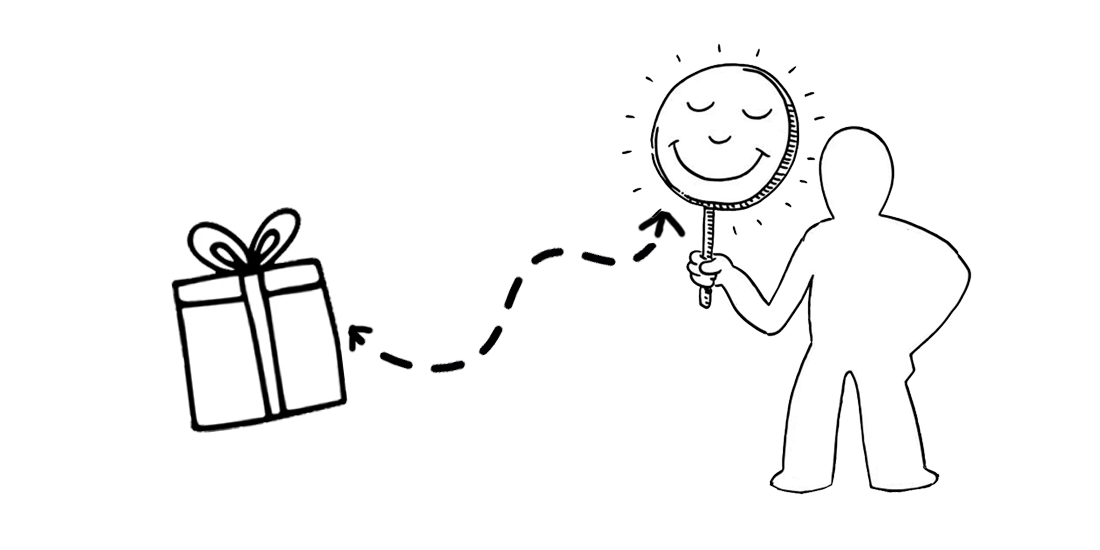
Value Proposition Mapping
Explore the value customers might gain and the needs a proposed solution should address.
Full exercise duration: 60–90 min
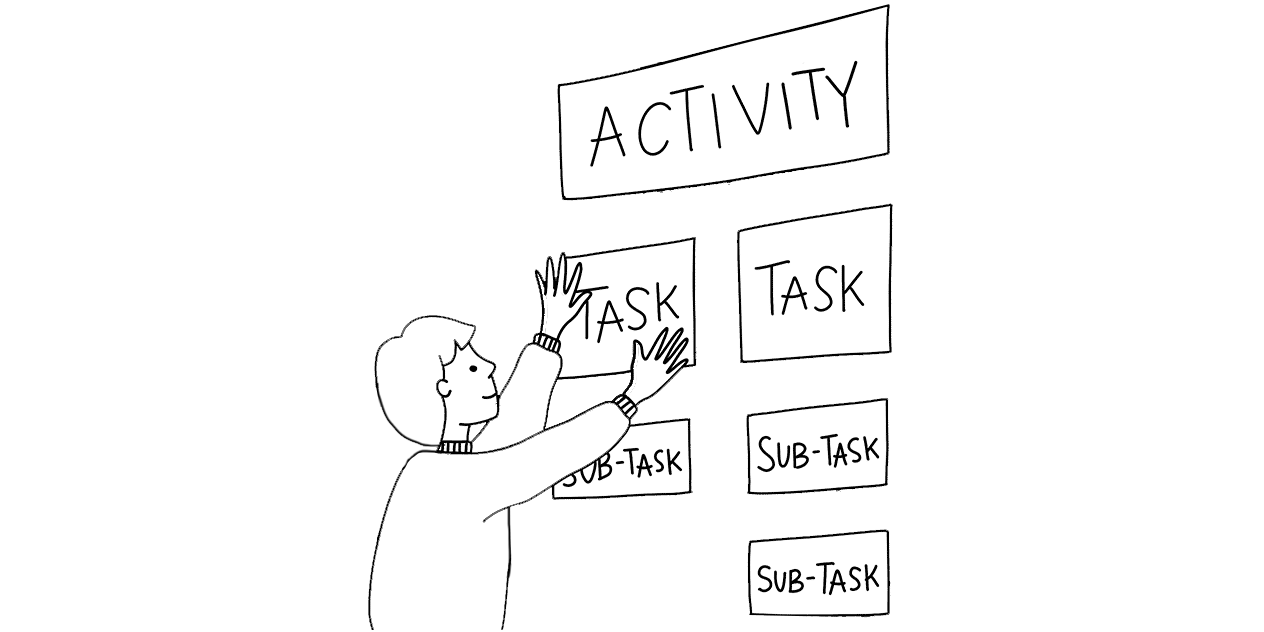
User Story Mapping
Visualize the end-to-end experience and align on potential solution scope once the opportunity is understood.
Full exercise duration: 60–90 min
Keep problem discovery and solution planning distinct. Assumptions Collection, Journey Mapping and Opportunity Solution Tree Mapping help teams examine what customers experience and need. Assumptions Mapping helps prioritize what to investigate. Value Proposition Mapping and User Story Mapping become especially helpful when exploring and aligning on possible solutions; neither should be treated as evidence that a solution is right.
Time-boxing matters: Several complete plays run 45–90 minutes or longer on their own. The 90-minute agenda above uses lightweight excerpts of mapping and assumptions work, not all six complete exercises. For detailed mapping, allow a dedicated follow-up session.
What to leave with: examples of workshop artifacts
At the end, the team should have visible artifacts that somebody can use tomorrow. They don't need to be beautiful; they need to distinguish what is known from what is believed.
1. A provisional opportunity map
Outcome: More new users complete their first useful project.
Opportunity A: People are unclear about the next step.
Opportunity B: People lack information needed to proceed.
Attach source notes or mark each opportunity “needs more evidence.” These examples are fictional.
2. An evidence / assumption log
Observed: Users hesitate at the setup screen in recorded usability sessions.
Assumed: Shortening setup would increase meaningful task completion.
Unknown: Whether hesitation is caused by comprehension, missing information or lack of motivation.
3. One focused research question
“At what point do first-time users lose confidence about their next action, and what information do they expect to see?”
Better than “Do users like our proposed onboarding wizard?” because it doesn't presuppose the answer.
4. A next-action record
Method: Observe first-time users completing a realistic setup task.
Owner: Product trio assigns a lead.
Next review: After the scheduled sessions.
Specify participant criteria, date and evidence needed in the real plan.
Worked example: discover why onboarding stalls
Starting question: “Why do new users stop before completing their first project?” The team suspects onboarding has too many steps, but has not confirmed the cause.
- Define the outcome. Help a greater share of new users complete their first meaningful project, without forcing completion through misleading prompts.
- Review evidence. Analytics identifies the step where many people leave. Interview notes show that some users are unsure what to do next; others lack the information required to proceed.
- Map opportunities. The team separates “understand the next action” from “have the required information.” These are distinct customer struggles even though both appear as drop-off.
- Identify assumptions. The team realizes it doesn't know which struggle is most common or most consequential.
- Choose the next action. Observe several first-time users attempting the flow and gather evidence about what blocks progress before redesigning it.
Illustrative scenario only. The observations and outcome are examples, not results from a named Learning Loop customer.
This is where Discovery Patterns can be helpful: it gives the team a shared reference for selecting research approaches and practical workshop exercises such as opportunity mapping. If the team later needs to compare experimental ways of checking a solution assumption, Validation Patterns is the more relevant deck.
Common failure modes, and what to do instead
| What goes wrong | Better facilitator response |
|---|---|
| Everyone starts proposing features. | Ask what customer need each feature addresses; move premature proposals to a separate parking area. |
| The loudest stakeholder defines the problem. | Use silent writing first and annotate each claim with customer evidence, interpretation or unknown. |
| The team spends the session debating the perfect tree. | Make a rough working map, pick one promising branch, and improve it with new evidence. |
| Analytics are presented as an explanation. | Clarify that behavioral data identifies patterns, not necessarily underlying motives; choose a follow-up method. |
| People vote on opportunities without evidence. | Separate the importance of an opportunity from confidence that it actually exists. |
| The workshop ends without action. | Reserve time for a named owner, research question, method, deadline and review. |
| A workshop is mistaken for continuous discovery. | Schedule a recurring evidence review and direct customer contact, not another ceremonial kickoff. |
Adapt the agenda when new evidence changes the question. As Boldare's workshop guidance also emphasizes, the appropriate techniques depend on the purpose and the agenda can change as teams learn. A facilitator should protect the outcome, not rigidly enforce an exercise sequence.
After the workshop: turn maps into learning
A map is useful only if it changes what the team does next. Share a short recap within a day, documenting the outcome, customer opportunities, evidence, prioritized assumptions, and who owns each research action.
Schedule a review of new customer findings. Update the opportunity map as evidence changes, and clearly mark solutions as hypotheses until you have learned enough to make an informed decision. If stakeholders ask for a feature immediately, show the evidence gaps the next study will address.
Avoid three common traps: treating stakeholder opinions as customer facts, voting on the most exciting feature before identifying the opportunity, and calling an untested map “validated.”
After the workshop: establish a continuous discovery cadence
The biggest mistake is treating the workshop as the end of discovery. An opportunity map captures current thinking; it isn't a document the team should freeze or present as proven fact. Keep it close to real user conversations and revise it as evidence changes.
- Within 24 hours: Share the decision log, draft map, unresolved questions and owner of the next research activity. Link back to source evidence.
- Within the next week: Conduct the selected customer touchpoints or small research activities. In Teresa Torres's continuous discovery framing, regular customer contact by the team is central; establish a cadence your team can sustain rather than treating the workshop as the only customer-facing event.
- At the next product trio check-in: Review what changed. Move supported observations onto the map, revise weak assumptions and decide whether to deepen an opportunity or consider possible solutions.
- Once solution directions are concrete: Identify the assumptions each solution depends on and test those assumptions before committing to extensive delivery. Validation Patterns is designed for this later stage.
Teresa Torres's SuperAwesome case study demonstrates an adaptable, gradual rollout of opportunity solution trees; the team's version evolved with additional assumptions and experiment information. The Doodle case study discusses the shift from feature production toward continuing product learning. Both reinforce that adopting a canvas is less important than changing how decisions get made.
Frequently asked questions
Who should attend a product discovery workshop?
Bring the people responsible for understanding customers and making product decisions: often product, design, research, and engineering, plus a customer-facing colleague where useful. A small cross-functional group is usually easier to facilitate than a very large one.
What is the difference between a discovery workshop and a brainstorming workshop?
Discovery starts from the customer problem and available evidence. Brainstorming primarily generates ideas. Product discovery can include ideation, but ideas should connect to observable opportunities and assumptions to test.
Can we finish Opportunity Solution Tree Mapping in 90 minutes?
A full mapping session may take 60–90 minutes by itself. Use the short agenda for an initial sketch, or dedicate a longer session to building and reviewing a research-grounded tree.
Do we need Discovery Patterns cards?
No. You can follow the publicly available plays with sticky notes or a digital board. The cards are a reusable toolkit for teams that want a collection of relevant methods and purpose-built exercises close at hand.
Make product discovery a repeatable practice
Start with real customer evidence, use a suitable exercise, and leave with the next thing to learn. The Discovery Patterns card deck combines methods for understanding customer needs with workshop exercises designed to help teams apply them.
Recommended reading and influences
Learning Loop's facilitation approach synthesizes principles from several sources; the agenda and examples on this page are our own teaching interpretation, not a workshop prescribed or endorsed by these authors.
- Teresa Torres and Hope Gurion: Why There’s No Single “Right” Way to Do Discovery, collaborative decision-making, externalized thinking and outcomes.
- Product Talk: Opportunity Solution Trees at SuperAwesome, adoption and adaptation in a real organization.
- Product Talk: Moving from a Feature Factory to Continuous Discovery at Doodle, organizational practice and the move toward outcomes.
- Inspired, Marty Cagan, empowered cross-functional product teams.
- Escaping the Build Trap, Melissa Perri, product value and outcomes rather than feature output.
- airfocus: How to Run a Product Discovery Workshop, another useful perspective on agenda and preparation.
- Maze: Continuous Product Discovery, routines for ongoing customer learning.