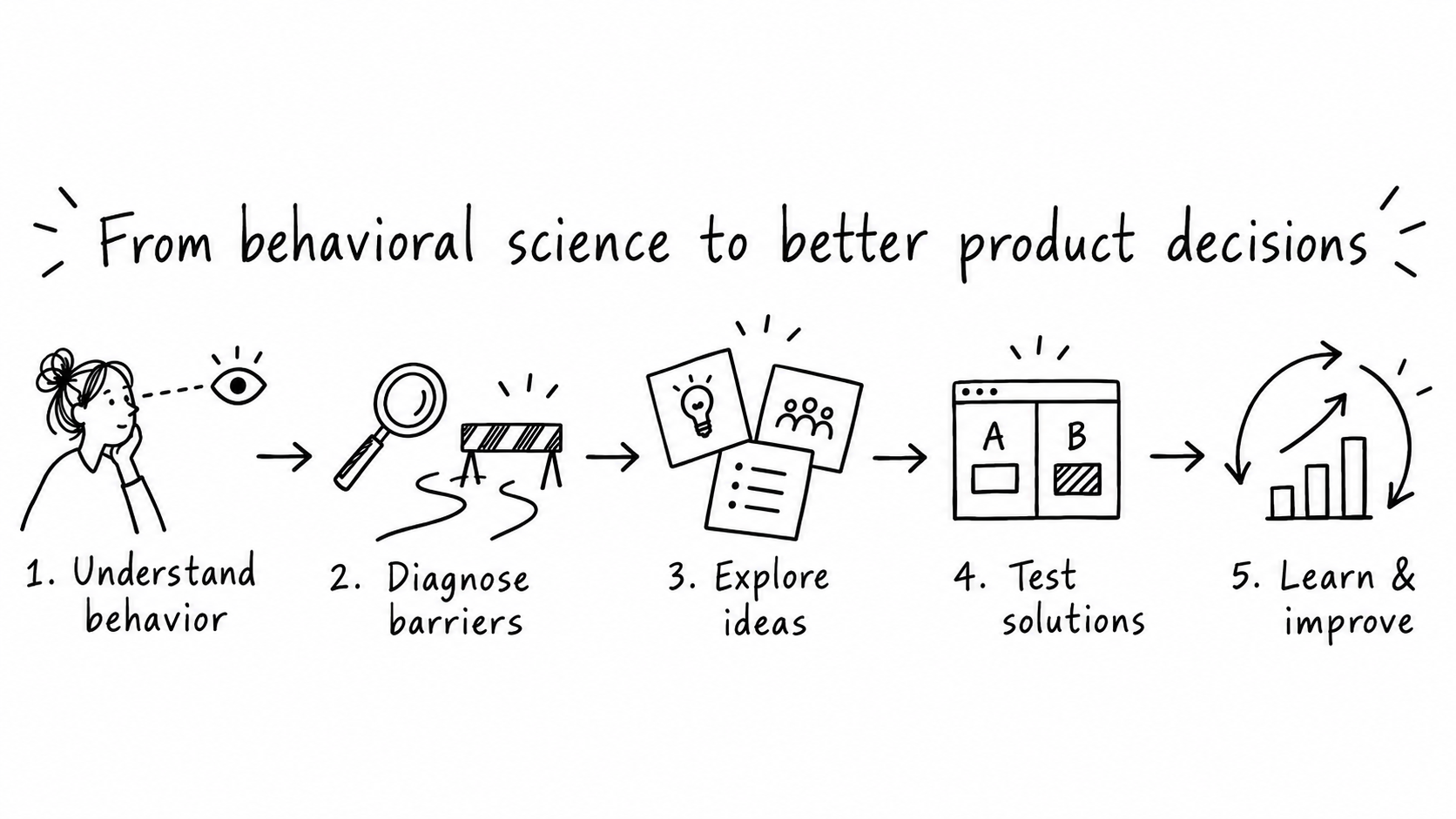
Learn
How to learn behavioral design
Build foundational knowledge with books, frameworks, a practical learning plan, and ways to practice with a team.
Best for: Designers and product people learning the discipline.
Learn the fundamentals, choose useful tools, and apply behavioral science thoughtfully in UX and product work.
Created by Anders Toxboe · Learning Loop
New to behavioral design? Start with the learning roadmap. Already working on a product? Choose a toolkit or explore practical psychology examples. Each guide has a different purpose, with links to related exercises and the free Persuasive Patterns library.
Build foundational knowledge with books, frameworks, a practical learning plan, and ways to practice with a team.
Best for: Designers and product people learning the discipline.
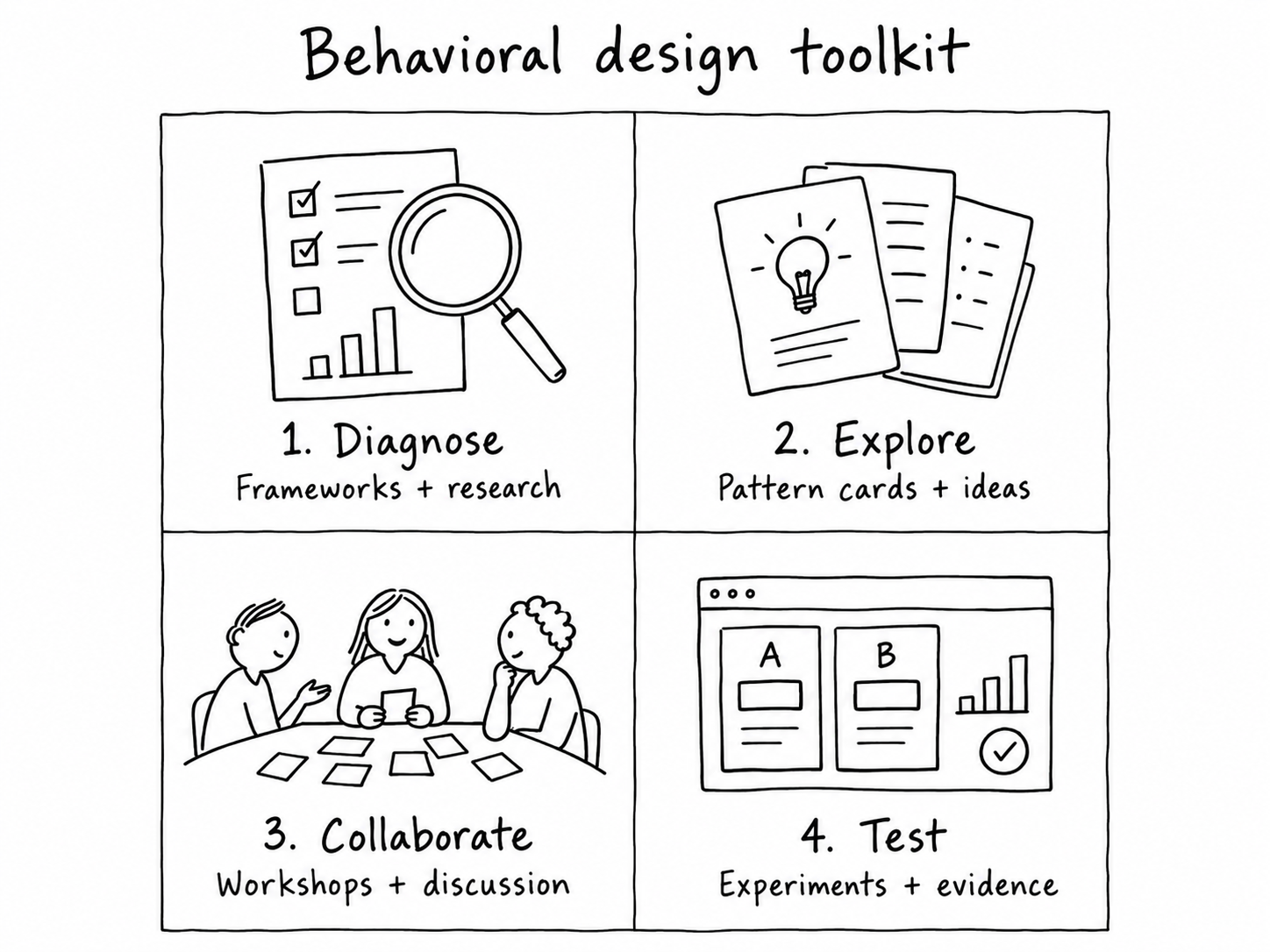
Compare frameworks, pattern libraries, workshops and testing methods, with examples of choosing the right approach.
Best for: Practitioners selecting tools for a specific problem.
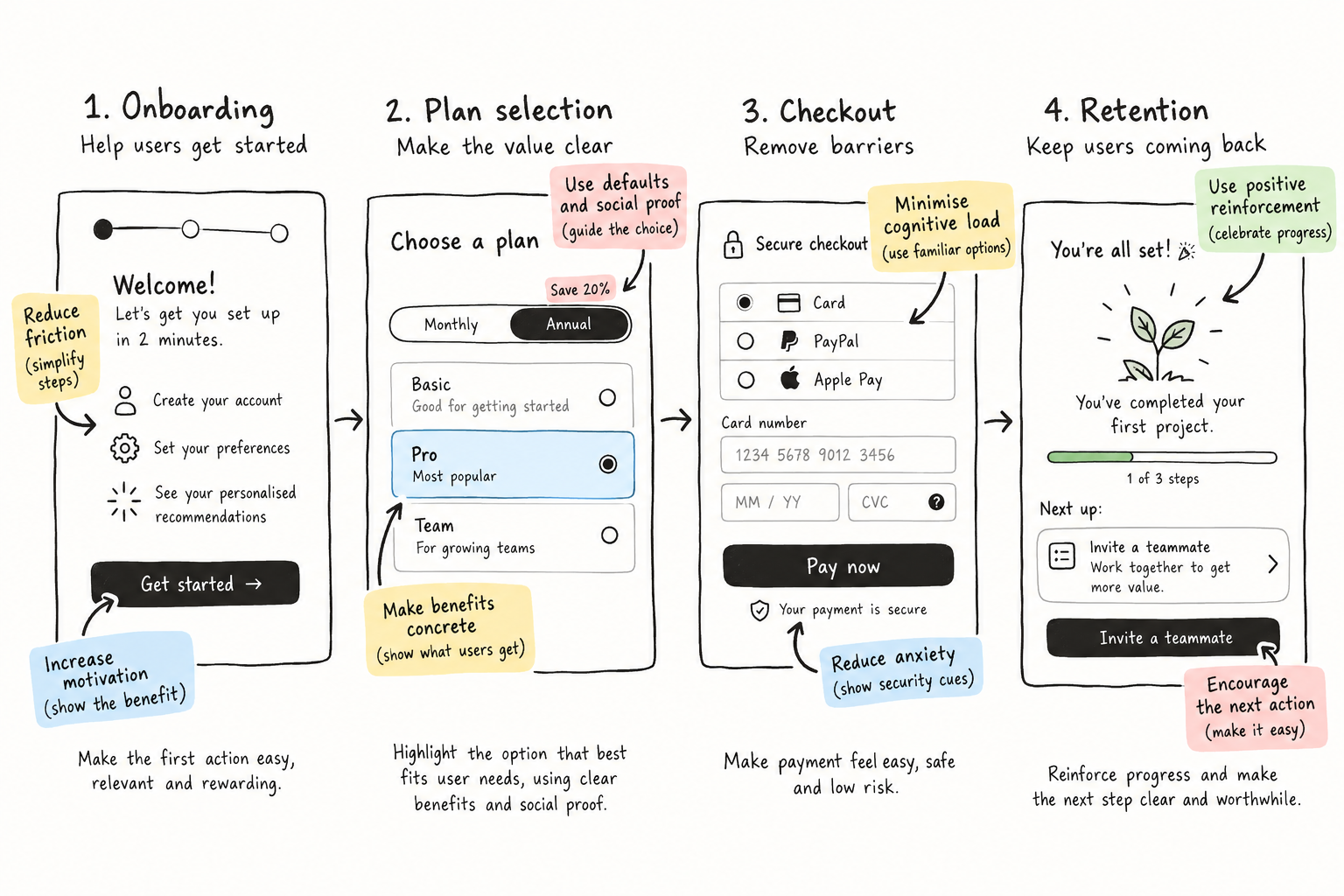
Examine user decisions in onboarding, conversion and retention, then develop and evaluate ethical interventions.
Best for: Teams making day-to-day product decisions.
Plan a session from understanding the target behavior through intervention ideas, decisions and next steps. Includes an example 90-minute agenda based on the Persuasive Patterns Workshop Playbook.
| If you're asking… | Start here |
|---|---|
| How do I build behavioral design skills? | Learning roadmap |
| Which frameworks or workshop methods help? | Tools and resources |
| How do I run a behavioral design workshop? | Workshop facilitation guide |
| How can psychology inform our product decisions? | Practical UX examples |
Explore the Persuasive Patterns playbook for behavioral principles and the Painkillers and Vitamins workshop for applying them to user barriers and enablers. The Persuasive Patterns card decks are an optional hands-on reference, not a prerequisite for reading the guides.
Use psychological ideas as hypotheses, not guaranteed conversion techniques. Research user needs, preserve informed choices, and check whether changes actually help people.