Consequence-driven Persuasion Techniques
Motivate behavior by highlighting potential consequences
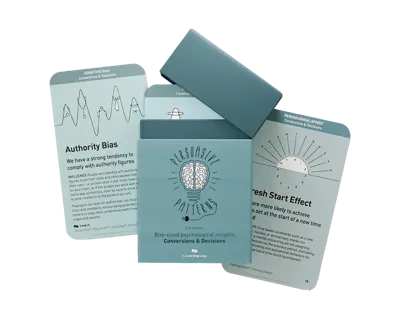
Explore these patterns in Persuasive Patterns: Conversions & Decisions.
Use physical cards to explore ways to reduce friction and help users make decisions.
$129 · Printed deck + digital edition
Get your deck!
Persuasive Technique
Commitment & ConsistencyWe want to appear consistent with our stated beliefs and prior actions

Psychological Effect
ReputationWe adjust our personal behavior to reflect how we are perceived by others

Important for this playbook
The Oblige behavior strategy focuses on increasing the expectation of costs or consequences of action. This strategy is particularly suitable when users need to be motivated to consider the potential downsides of their actions.
Designers should look to the Oblige category in situations where highlighting the negative outcomes of certain behaviors or inactions is crucial for driving behavior change.
Theoretical backgrounds within psychology, such as prospect theory and loss aversion, support the effectiveness of Oblige patterns by emphasizing the impact of perceived costs or consequences on decision-making. By incorporating Oblige strategies, designers can encourage users to make more informed choices and take actions aligned with desired outcomes.
Explore these patterns in Persuasive Patterns: Conversions & Decisions.
Use physical cards to explore ways to reduce friction and help users make decisions.
$129 · Printed deck + digital edition
Get your deck!